Parish
History of the Parish
The modern parish of Boherlahan-Dualla is 20,226 acres (approximately 32.6 sq.miles) in extent. It is bounded to the north by Holycross and Moycarkey; to the south by Cashel, to the east by Killenaule-Moyglass and to the west by Knockavilla and Clonoulty.
It has its origins in the old medieval parishes of Ardmayle, Ballysheehan and Erry. These old parishes were formed during the early years of the Norman occupation, c.1185, and are believed to have been based on pre-existing divisions, probably some version of the Thuath.
Ardmayle and Ballysheehan were formed at the earliest stage of the occupation and were placed in the care of The Knights Templar who accompanied the Normans to Ireland. When The Templars were suppressed their rectories were transferred to The Knights Hospitallers who replaced them.
It is believed that the formation of Erry parish took place at a later date when the Cistercian order came to Hoar Abbey in Cashel and Erry was created from portion of Ballysheehan to provide support for the order. A further portion of Ballysheehan had been granted to the Cistercians of Holycross by the O’Brien kings of Cashel which consisted of the townsland of Ballykelly.
The early churches
During this early period the parish had churches at Ardmayle, Ballysheehan, Erry, Ballykelly, Kilballyherberry and Ballytarsna. According to the parish registers left by Father Mannin (1736-1740) Ardmayle was dedicated to St. John, Baptist; Ballysheehan to The Assumption of St. Mary and Kilballyherberry to St. Laurence. There are no records of the dedication of the other churches. It is probable that Kilballyherberry and Ballytarsna were chapels of ease or private chapels associated with local lordships.
The 19th century additions to the newly named parish of Boherlahan-Dualla brought with them the old churches of Gaile (parish church); Tubberadora (church of ease to Holycross Abbey); Killeen in Camus (chapel attached to the Archbishop’s Manor at Camus), and Cill Briste, an old monastic site on the boundary of Camus with Hoar Abbey. Tradition also tells of a probable church at Kilbreedy, founded by, or dedicated to, St. Brigid.
Reformation and the Penal Era
The arrival of the Reformation signalled the end of most of the churches still in existence. The Cistercians were suppressed, their properties annexed by the king and granted to his supporters while the remaining churches with the possible exception of Ardmayle fell into disuse and decay during the latter part of the reign of Elizabeth I and that of James I.
Following the rising of 1641 and the effects of the Counter-Reformation there appears to have been a revival of the Catholic Church to the extent that Ardmayle (and possibly Ballysheehan) had a new parish priest in the person of Fr. William Mulvihill who, unfortunately, is missing from records after the Cromwellian campaign. He is, however, the first parish priest of the parishes in the modern era.
In 1704 despite the enactment of the Penal Laws a regulation was made by the authorities that all priests claiming jurisdiction over a parish must register and provide certain information. Fr. Philip Coleman registered as parish priest of Ardmayle, Ballysheehan and Erry; he lived at Gortmakellis and had been ordained in 1675 and was ministering in the area since 1680. By this time all of the old parish churches were in ruins with the exception of Ardmayle, which, according to the late Canon Fogarty was repaired and used for a time by the Protestants of the locality.
The Penal Chapels
There were then two “Penal Chapels” in the parish: that for Ardmayle parish was located in Nodstown beside an old road called “the Boherlahan” and was a good chapel in good condition; that for Ballysheehan was located down a laneway in the townsland of Dually and was described in 1760 as being “in a tottered and decayed condition”. Both were probably in existence since c.1680.
It was at this stage that the name Dually replaced Ballysheehan as part of the parish name.
The Parish Churches
A new church at Nodstown
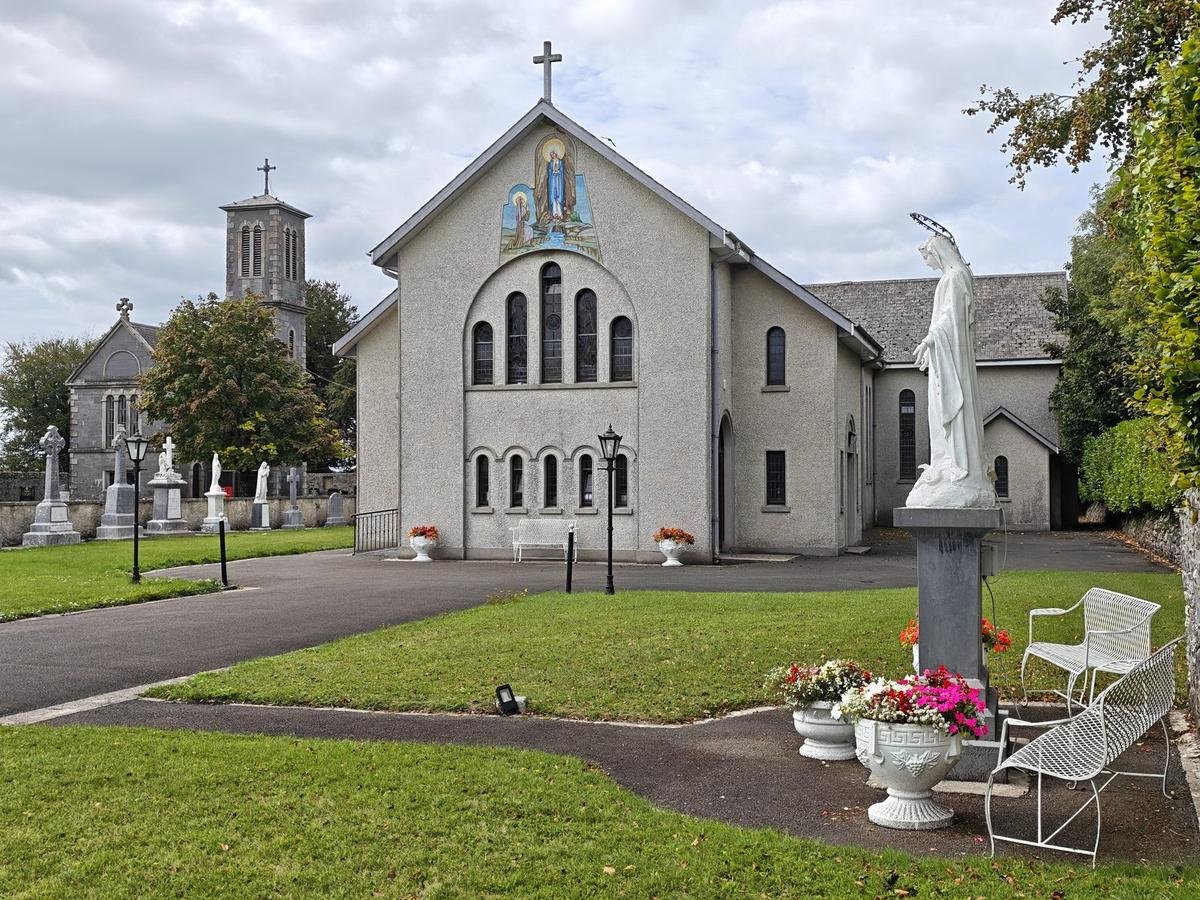
Close to the end of the 1800s when the then P.P., Fr Kennedy, became infirm due to old age, Fr. Slattery came to Ardmayle as Administrator and was appointed P.P. in 1795. In 1807 he secured a long lease on a site for a new chapel in Nodstown from the Blue Coat Hospital, owners of Nodstown estate and building of a new church commenced soon afterward. Fr. Slattery retired in 1813 before the completion of the church which was dedicated to Ss. Peter and Paul in 1815.
Changing boundaries
It is possible that Fr. Slattery resigned because of the major changes to the parish boundaries in those very early years of the 19th century, as he lived until 1830. These changes involved the addition of the townslands of Coloraine and Caherbaun from the old parishes of Magorban and Kilconnell respectively and the transfer of most of St. Patrick’s Rock north of Cashel town to the parish. The parishes now became known as Boherlahan and Dualla.
The final change to the parish boundaries took place before 1884 (see curates collection list 1884 which shows contributions from Tubberadora, Gaile and Regaile) but was not legally signed into existence until 1903. This change added the townslands of Tubberadora, Regaile and half of Gaile to Boherlahan in exchange for the transfer of most of Aughnagomaun to Moycarkey.
Dualla, and the churches we know today
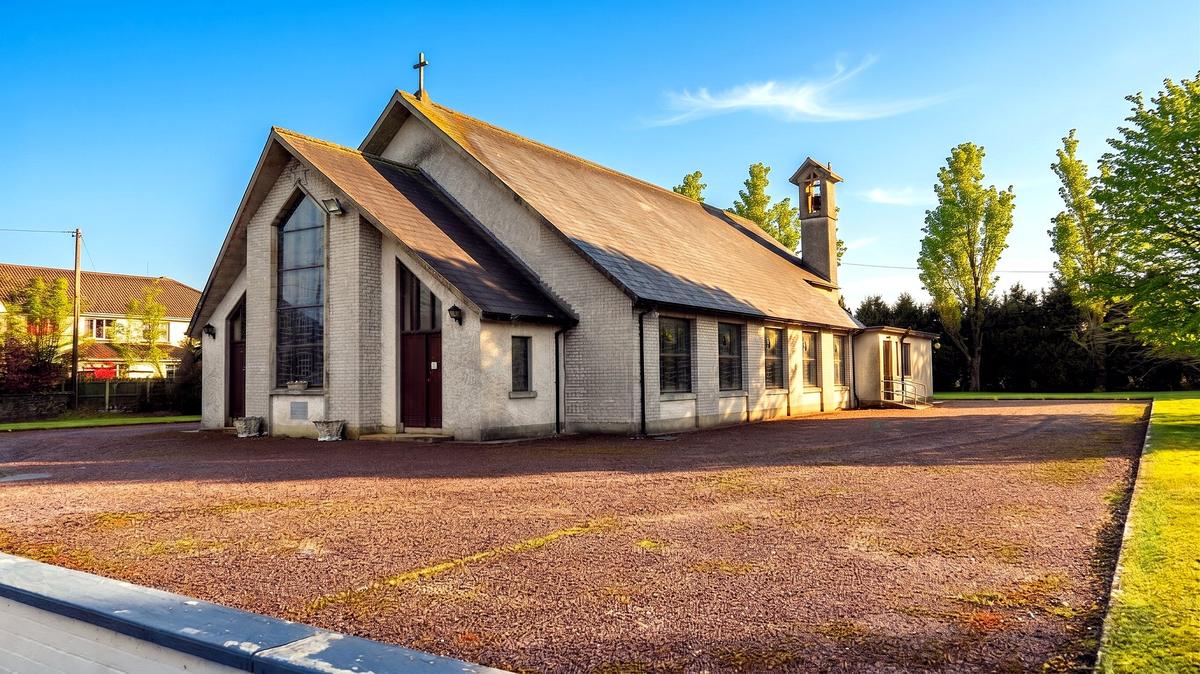
Fr. Slattery was succeeded by Fr. Patrick Flanagan who completed Boherlahan church and secured a lease in Rathclough North from Oliver Latham for a new church at Dualla in 1826. Fr. Flanagan was transferred to Killenaule in 1828 before the new church was completed and the work was carried on by his successor, Fr Kirwan who completed it in 1829, using, it is said, funds from his own resources. This church was dedicated to St. John.
During 1963/4 the church in Boherlahan, then about 150 years old was extensively altered and re-constructed during the pastorate of Canon M.B. O’Dwyer and was re-dedicated to The Immaculate Conception. In 1972/3 during the pastorate of Canon M. Morrissey the church in Dualla was demolished and replaced by a completely new church, dedicated to Our Lady of Fatima.
Ardmayle and Bianconi’s Chapel
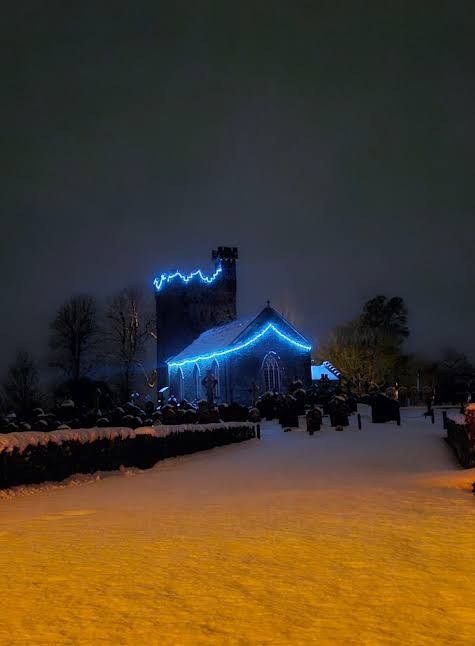
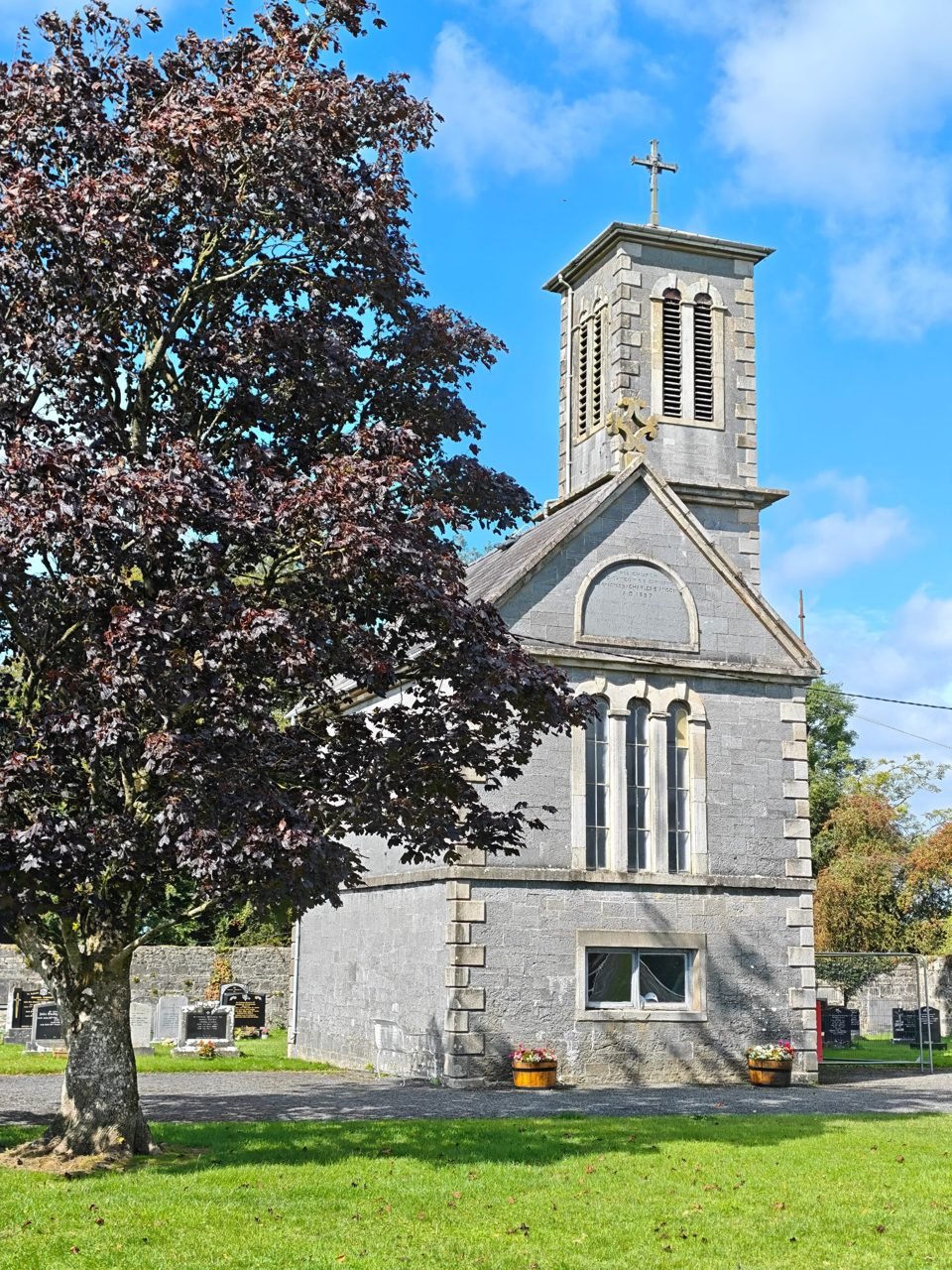
In 1983 during the pastorate of Fr. Feehan the old Protestant church at Ardmayle which had been built within the footprint of the medieval church in 1815 was listed for demolition. This was resisted by the local people who formed The Ardmayle Heritage Society to acquire and preserve the church and 13th century attached tower.
The Cashel and Emly Diocesan Trust eventually acquired the building which now forms part of the property of Boherlahan-Dualla parish under the care of the parish priest with the active assistance of the Ardmayle Heritage Society as a heritage centre and for occasional Masses and other religious services.
The parish has now also taken responsibility for the Bianconi mausoleum beside the parish church. Built in 1858 by Charles Bianconi as a family burial place, it is now better known as “Bianconi’s Chapel” and is dedicated to St. Catherine. The chapel was taken in care by the parish as part of an old agreement which was not adhered to by Bianconi’s successors and is now being refurbished by a local committee.
Burial Grounds
Ardmayle and Dualla each has an extensive modern burial ground attached. A small burial ground with set limits is attached to the Bianconi chapel and a burial area for priests is attached to the parish church in Boherlahan.
Ballysheehan, Ballytarsna and Kilballyherberry have attached burial grounds which are now very rarely used. Ballykelly, Tubberadora and Kilbriste have no known burials and Killeen in Camus was used for the burial of stillborn, unbaptised infants until the 1920s but this has been obliterated completely during land improvements in the 1980s. A small now-deserted burial ground exists at Raheen crossroads near Dualla on the site of Ballysheehan protestant church (demolished).
Notable Priests
Father Mannin
Among the most noted of parish priests is Father Mannin, (1736-1740) a scholarly man who left us one of the earliest surviving parish registers and continued the practice when transferred to Killenaule.
Dr. John Butler
One of his successors was Dr. John Butler, P.P. Ardmayle and Dually (1759-1763) a son of the then 18th Lord Dunboyne. He was secretary to his cousin, Archbishop James Butler, and Deacon of the Archdiocese. In 1763 he was appointed bishop of Cork at which time he was 4th in line to the family title but due to a series of early deaths and marriages without heirs he found himself heir to the title in 1786.
He sought permission from the pope to resign and marry and, when refused, he went ahead and in 1787 married a cousin and conformed to the Protestant faith. The marriage was unsuccessful and did not produce an heir as was his intention. He is believed to have repented before his death in 1800 and in his will, left funds for the founding of a chair of higher studies in the newly-founded Maynooth seminary which is now known as “the Dunboyne”.
Bishops born in the parish
The parish was birthplace to Bishop Scanlan of Gaile (USA) and Bishop Gleeson of Dualla (Australia/New Zealand) in the 19th century.
Antiquities and Schools
The parish has a wide range of antiquities ranging from Bronze-Age burial sites at Ballinree and Ardmayle to Stone-Age monuments at Ballinree, Kilbreedy and Ballyherberry; castles and tower-houses at Synone, Ballytarsna, Nodstown, Castlemoyle, Garrane, Kilballyherberry, Camus, Thurlesbeg and Ardmayle.
The parish has now three national schools; Boherlahan (an amalgamation of the old Ardmayle and Nodstown national schools in 1971); Ballytarsna and Dualla. Ardmayle was founded in 1830, Nodstown in 1839, Dualla in 1845 and Ballytarsna in 1874. All replaced numbers of old “hedge” Schools. All have, since their founding have been managed by the P.P. of the day.
A Proud Sporting Tradition
The name of the parish of Boherlahan-Dualla immediately conjures up images of its central role in the game of hurling, not only in the parish, but in county Tipperary and nationally.
There is scarcely any G.A.A. enthusiast anywhere in Ireland who would not readily recognise the name.
Hurling
Starting with the great Tubberadora team of the 1895/98 era, the Suir View team of the same time and the Ballytarsna team of 1901, all of whom won county S.H. titles, and the three All-Ireland wins by Tubberadora, the Boherlahan team led by the great Johnny Leahy, from 1912 to 1930 secured fame in winning 10 county titles and two All-Irelands.
While those purple patches have not been repeated as often as parishioners would wish, the Boherlahan-Dualla name is seldom far from prominence. The most recent Boherlahan-Dualla All-Ireland medal holder is Conor Gleeson from Boherlahan village.
Beyond hurling
Hurling is not the only sport in which locals have excelled: in the late 1950s/early 1960s Tommy Wade of Camus gained national and international fame in showjumping arenas with his wonder horse, Dundrum; Sean Leahy of Boherlahan with his great greyhound, Dubedoon, achieved international acclaim when winning the Waterloo cup; Ned Kirwan of Dualla House also brought great credit to the parish when a horse, Amberwave, bred by him, won the English Grand National in 1928; Billy O’Dwyer of Bawnmore was unchallenged as the greatest long distance runner in Tipperary for a decade in the 1960s, and, more recently, the parish took great pride in the part played in successful Irish international rugby teams by the great Denis Leamy of Dualla and by Dan Tuohy, a descendant of Tuohys of Ardmayle.
The many members of the Kinane family of horse racing fame from Ballinahinch who attended school at Ardmayle are also worthy of mention. Also, in sporting terms, the parish once could boast of two racecourses; one at Camus and the other at Freighduff.
Notable People
The parish has been home to a number of notable personalities over the years.
Business
In the business field the best known is Charles Bianconi, the transport entrepreneur who came to live at Longfield House in 1846 and died there in 1875. Maurice Sheehy of Erry rose to prominence in 1979 when he became Managing Director of the Irish Sugar Company. Tony Ryan founder of Ryanair was a son of a Ryan of Peake.
The struggle for freedom
In the struggle for freedom, Piaras McCan, T.D. of Ballyowen gave his life in an English prison, dying during the great ‘flu of 1918; brothers James and Laurence Looby and William Delaney all of Dualla and all members of the Dualla company IRA were killed by British forces as was Commandant Paddy Hogan, a native of Longfield. At an earlier time Michael Ryan (Wall) of Castlemoyle was a noted Fenian member as well as a leader of farmers during the land wars and suffered prolonged imprisonment for both.
Politics
In politics the best known denizen of Ardmayle was Lord Edward Carson, founder of the Northern Ireland state who spent most of his holidays during his student years with his uncle, Rev. William Carson, M.D., rector of Ardmayle. Andy Fogarty (1932-1948) of Grangemore and Mick Davern (1948-1965), born in Ballydine were both elected TDs on the Fianna Fail ticket. Jack Clancy, a native of Co. Sligo was elected TD as a member of the first Dail in 1918 and who later married a Coman from Bawnmore is buried in Ardmayle.
Education and scholarship
D.C. Maher, B.A., N.T. of Ardmayle, principal of Ardmayle N.S. (1882-1927), and President of the INTO in the early 1900s; his brother Rev. Michael Maher, one time secretary to the archbishop and later P.P. Killenaule, a noted historian of the archdiocese, and Andy Finn, N.T., Dualla, antiquarian, historian and author of a number of books on local history are all well worthy of recognition.
In more recent times
In more recent times T.J. Maher of Castlemoyle achieved national and international fame as a farmers’ leader and as a member of the European parliament, while his brother Jamesie was a noted surgeon attached to St. Vincent’s Hospital in Dublin and medical consultant to the IRFU. Patrick Walsh, a native of Ballydine, became head of New York Fire Dept. in the early 1900s.
Business and Enterprise
In business and enterprise the parish once had a number of woollen mills and flour mills located at Cluen, Camus (2), Thurlesbeg and Tubberadora (the last to close in the 1930s). A small branch creamery operated at Erry from c1900 to the 1960s while a major creamery operated at Ardmayle (1901 to the 1970s). Ardmayle’s “Suir Valley” butter was a famed brand in its day.
A brickyard also operated at Ballypadeen at the edge of the parish but closed in the later 1800s. The parish itself was very enterprising in the building in 1948 of the parish hall, one of the first of its kind in a rural parish.
The Parish Today
The parish is presently in the care of Very Rev. Michael Mullaney, a native of Thurles.
A minor point, perhaps a curiosity, in relation to parish priests, is that in a parish comprised overwhelmingly in the past of Dwyers, Ryans, Hayeses and Mahers, no parish priest of any of these names ministered between c.1640 and 1935: almost 300 years! Then in 1935 Fr Willie O’Dwyer from Clonoulty parish became P.P. and was followed by Fr. M.B. O’Dwyer also from Clonoulty. Still no Ryan, Hayes or Maher!